

Empowering Foremen with Real-Time Hazard Recognition Tools
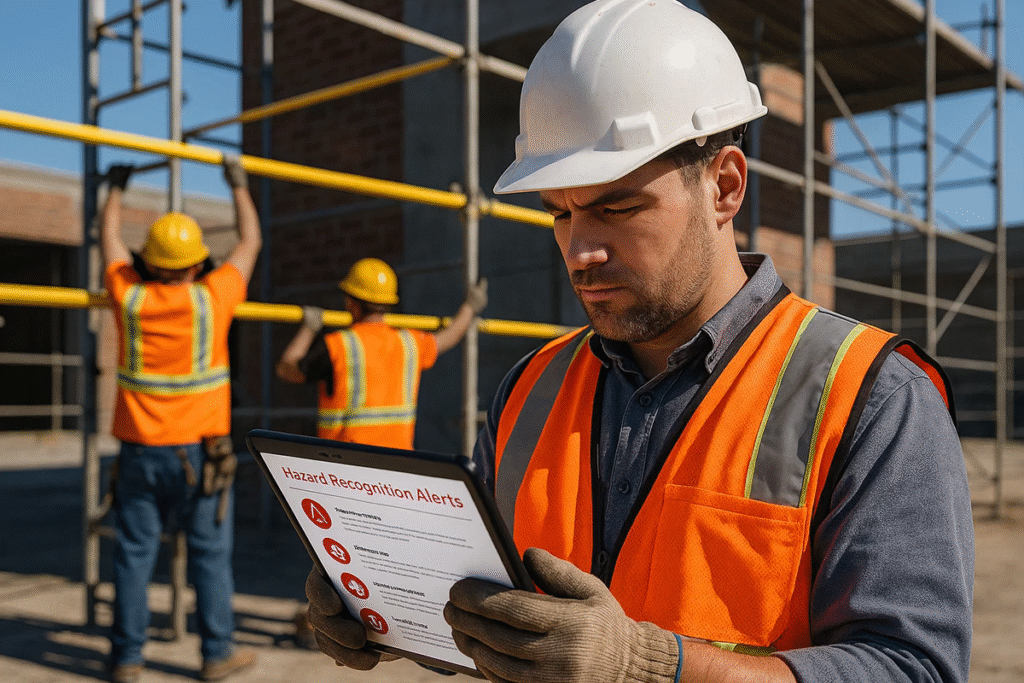
Foremen serve as the critical link between management decisions and frontline worker safety. They are the first to see hazards, the first to act in emergencies, and the first to shape the safety culture of a jobsite. Yet, many still rely on paper checklists or delayed reporting systems that fail to capture hazards in real time. By equipping foremen with modern hazard recognition tools, organizations can transform safety from a reactive process into a proactive shield.
OSHA underscores that effective safety programs rely on management commitment and employee involvement, including empowering supervisors to identify and correct hazards quickly (Occupational Safety and Health Administration, n.d.). Mobile hazard recognition platforms, wearable technology, and AI-driven site monitoring now give foremen real-time alerts about unsafe conditions, from equipment malfunctions to environmental exposures. With these tools, hazard recognition is no longer just observation it becomes immediate, actionable intelligence.
The Department of Transportation echoes this proactive approach in its National Roadway Safety Strategy, highlighting technology as a way to reduce risks before they result in accidents (U.S. Department of Transportation, 2022). For construction sites, this translates to foremen using mobile apps to log near-misses, receive fatigue alerts for drivers, or instantly communicate blocked egress routes.
Environmental resilience also benefits from real-time hazard recognition. The Environmental Protection Agency stresses that pollution prevention depends on early detection and rapid response to spills, emissions, and chemical handling risks (Environmental Protection Agency, 2023). When foremen are equipped with digital reporting tools that capture both safety and environmental hazards, projects avoid fines and reputational damage.
FEMA adds a continuity lens, noting that hazard recognition tools help ensure essential functions continue during and after an emergency. Real-time communication of hazards allows leaders to respond faster, protect workers, and maintain operations with minimal disruption (Federal Emergency Management Agency, 2021).
The four pillars of safety training, hazard prevention, worksite analysis, and management commitment are all strengthened by empowering foremen. With digital hazard recognition tools, training is reinforced through instant feedback, hazard prevention becomes predictive, worksite analysis is constant, and management commitment is visible in the resources provided to frontline leaders.
At Key Safety LLC, we help organizations move hazard recognition into real time. Through our Document Development for Start-up Projects, we create hazard recognition protocols tailored for digital tools. Our Service on Demand provides foremen with rapid training on new technologies and response procedures. Our Regular Consultation Service ensures hazard recognition evolves alongside industry best practices, regulatory changes, and site-specific risks.
Empowering foremen is about more than compliance it is about building resilient, responsive worksites where hazards are recognized and controlled before they cause harm. Real-time tools make safety leadership immediate, effective, and transformative.
References
Environmental Protection Agency. (2023, July 24). Pollution prevention (P2) program. U.S. Environmental Protection Agency. https://www.epa.gov/p2
Federal Emergency Management Agency. (2021, March 3). Continuity of operations planning. U.S. Department of Homeland Security. https://www.fema.gov/emergency-managers/national-preparedness/continuity
Occupational Safety and Health Administration. (n.d.). Recommended practices for safety and health programs. U.S. Department of Labor. https://www.osha.gov/safety-management
U.S. Department of Transportation. (2022, January 27). National roadway safety strategy. U.S. Department of Transportation. https://www.transportation.gov/nrss
Comments:
