

Hurricane Preparedness as a Financial Protection Strategy for Construction and Railroad Operations
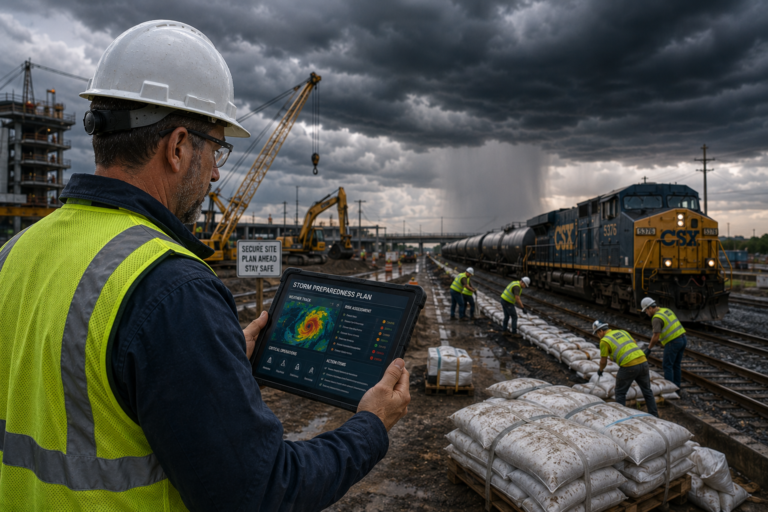
EHS consulting and OSHA compliance programs have traditionally focused on protecting workers and maintaining regulatory compliance. However, organizations operating in construction and railroad environments are increasingly recognizing that hurricane preparedness is also a critical financial protection strategy. As severe weather events continue affecting operations across the United States, leadership teams are evaluating preparedness not only through a safety lens but through the broader context of operational resilience, asset protection, business continuity planning, and long-term financial performance.
Hurricanes create a unique combination of risks for construction and railroad operations. Beyond immediate threats to employee safety, these events can disrupt project schedules, damage infrastructure, interrupt supply chains, increase insurance costs, delay customer commitments, and create substantial recovery expenses. For organizations operating in hurricane-prone regions, the financial consequences of inadequate preparedness can far exceed the direct costs associated with emergency response activities.
The Occupational Safety and Health Administration (OSHA) emphasizes emergency preparedness and hazard planning as essential components of workplace safety programs (Occupational Safety and Health Administration [OSHA], n.d.). Effective hurricane preparedness aligns directly with OSHA requirements while also helping organizations reduce operational losses, protect critical assets, and accelerate recovery following severe weather events.
Sector-Specific Hurricane Risks: Construction and Railroad Operations
No two industries face identical hurricane risks, and understanding sector-specific exposures is the foundation of an effective financial protection strategy. Construction and railroad organizations face distinct vulnerabilities that require tailored preparedness approaches.
Railroad Operations: Infrastructure, Service Continuity, and Recovery Costs
For railroad operations, hurricanes can impact track infrastructure, signaling systems, bridges, communications networks, fuel supplies, and terminal operations across wide geographic areas. Flooding, high winds, and storm surge can cause extensive infrastructure damage that disrupts service and requires significant restoration investment. Track washouts, signal failures, and damaged bridges can suspend operations for days or weeks, creating compounding financial impacts from lost revenue, regulatory reporting obligations, and emergency repair costs. Organizations that proactively assess vulnerabilities and establish infrastructure protection and continuity measures often experience reduced downtime and faster operational recovery following major weather events.
Construction Operations: Project Risk, Equipment, and Contractual Exposure
Construction projects face similar but distinct financial risks. Severe weather can damage partially completed structures, compromise material inventories stored on-site, delay critical project milestones, and increase contractual risks with owners and subcontractors. Equipment losses, project interruptions, workforce displacement, and site damage can quickly create substantial financial exposure if contingency plans are not in place before hurricane season begins. Organizations that incorporate hurricane preparedness into project planning, contract language, and site safety programs are better positioned to manage these exposures and maintain client commitments even under adverse conditions.
Business Continuity Planning and ISO Frameworks for Hurricane Resilience
ISO 22301, the international standard for business continuity management systems, provides a structured framework for identifying operational threats, assessing financial impacts, and developing organizational resilience strategies that support continuity during disruptive events (International Organization for Standardization [ISO], 2019). When combined with ISO 45001 occupational health and safety management principles, organizations can simultaneously strengthen both worker protection and financial resilience (International Organization for Standardization, 2018).
Business continuity planning extends hurricane preparedness well beyond emergency response protocols. It addresses how organizations maintain essential functions, communicate with clients and stakeholders, protect critical assets, manage supply chain disruptions, and recover operations efficiently after a hurricane has passed. For construction and railroad operations, this distinction is critical: emergency response addresses what happens during the storm, while business continuity planning determines how quickly and effectively the organization recovers and resumes normal operations afterward.
EHS consulting professionals frequently assist organizations in aligning hurricane preparedness and continuity planning with both OSHA regulatory requirements and ISO management system standards, ensuring that preparedness investments deliver measurable compliance, safety, and financial protection benefits.
Key Elements of a Financial-Focused Hurricane Preparedness Program
Risk Assessment and Financial Exposure Analysis
Financial protection begins with a structured risk assessment. Organizations should evaluate facility and site exposure, equipment vulnerabilities, project location risks, transportation dependencies, emergency supply requirements, and operational recovery costs. Understanding potential financial impacts, including revenue disruption, repair costs, contract penalties, and insurance implications, allows leadership teams to make informed, risk-proportionate investments in preventive measures before hurricane season arrives.
Critical Business Function Protection
One of the most overlooked aspects of hurricane preparedness is the protection of critical business functions beyond physical assets. Many organizations focus heavily on facilities and equipment while underestimating the importance of communication systems, data availability, supplier relationships, and workforce readiness. Business continuity planning helps organizations identify these vulnerabilities before a storm arrives and establish protocols that protect operational capability during and after the disruption.
Insurance Strategy and Preparedness Documentation
Insurance considerations play a significant and often underappreciated role in hurricane preparedness as a financial protection strategy. Insurers increasingly evaluate preparedness program maturity, risk management practices, and continuity planning efforts when assessing coverage terms and processing claims. Organizations with documented preparedness programs, completed pre-storm property inspections, and structured business continuity plans often demonstrate stronger risk profiles and experience smoother claims processes.
Technology, Monitoring, and Situational Awareness
Technology is becoming an important component of hurricane preparedness strategies for construction and railroad operations. Weather intelligence systems, infrastructure monitoring tools, emergency communication platforms, and digital continuity planning solutions can provide greater operational visibility before, during, and after severe weather events. However, technology investments deliver maximum value when supported by documented procedures, trained personnel, and clear leadership accountability structures.
Workforce Preparedness and Safety Training
Employee preparedness remains equally important to infrastructure and technology planning. Workers who understand emergency procedures, evacuation requirements, communication protocols, and post-storm recovery expectations contribute significantly to organizational resilience. Regular hurricane preparedness training and tabletop exercises help ensure that plans remain practical, current, and effective, supporting both OSHA safety compliance and operational continuity objectives.
Hurricane Preparedness as a Competitive and Strategic Investment
Organizations that view hurricane preparedness solely as a seasonal compliance obligation may overlook significant opportunities to reduce long-term financial risk and strengthen competitive positioning. The most effective preparedness programs integrate safety management, business continuity planning, asset protection, and operational resilience into a unified strategy that supports sustained business stability across multiple hurricane seasons.
The costs associated with hurricane preparedness planning, workforce training, infrastructure hardening, and continuity program development are consistently lower than the financial consequences of prolonged operational disruptions, infrastructure damage, and recovery expenses following a major hurricane.
How Key Safety LLC Supports Hurricane Preparedness and Financial Resilience
Key Safety LLC helps construction and railroad organizations evaluate hurricane vulnerabilities, develop business continuity plans aligned with OSHA requirements and ISO 22301 standards, strengthen workforce preparedness programs, and build the operational resilience needed to manage severe weather impacts effectively.
Hurricane preparedness is ultimately an investment in organizational resilience and financial stability. The preparation, planning, and training conducted before a storm arrives are consistently the most cost-effective measures an organization can take to protect employees, preserve assets, maintain operational continuity, and accelerate recovery. Contact Key Safety LLC to discuss how we can help your organization build a stronger hurricane preparedness and resilience program.
References
International Organization for Standardization. (2018). ISO 45001: Occupational health and safety management systems – Requirements with guidance for uses (ISO Standard No. 45001:2018). https://www.iso.org/standard/63787.html
International Organization for Standardization. (2019). Security and resilience — Business continuity management systems – Requirements (ISO Standard No. 22301:2019). https://www.iso.org/standard/75106.html
Occupational Safety and Health Administration. (n.d.). Emergency preparedness and response. U.S. Department of Labor. https://www.osha.gov/emergency-preparedness
Comments:
