

Improving Near-Miss Reporting Through Cultural Change
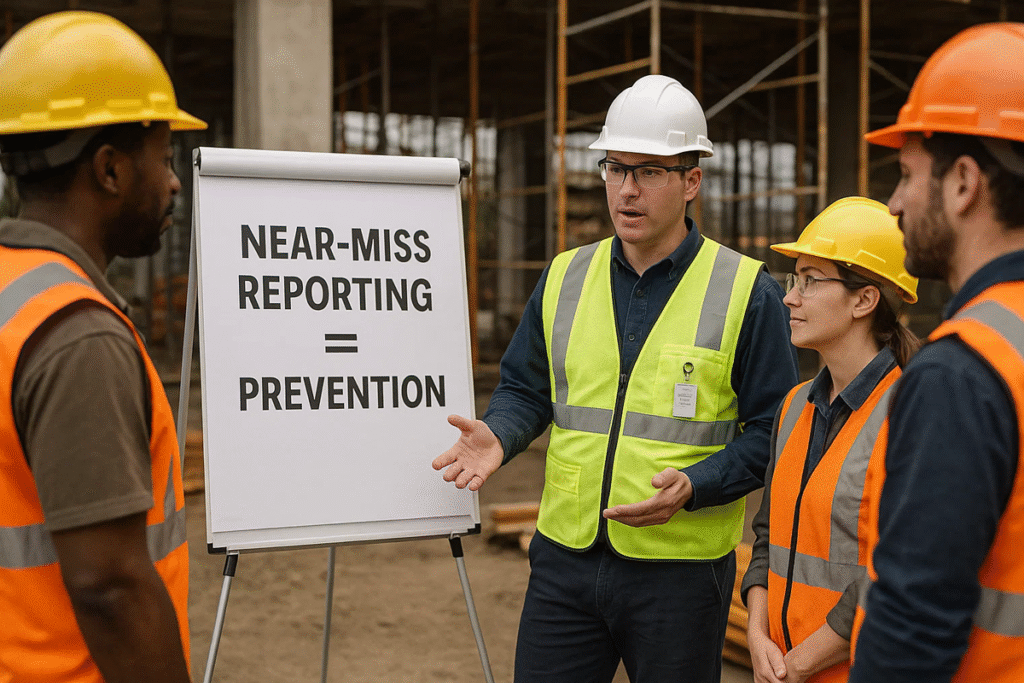
Near-misses are early warnings. Treating them as learning opportunities rather than blame events turns safety culture from reactive to preventive. OSHA frames near-miss reporting as a leading indicator that improves outcomes when employees can report hazards and close calls without fear of retaliation, and when organizations act on those signals to prevent future harm (Occupational Safety and Health Administration, 2019 -a); (OSHA, 2016.-b). That mindset shift is cultural as much as procedural. It depends on leaders inviting reports, responding quickly, and transparently sharing what changed because someone spoke up.
Evidence from transportation shows what a trusted reporting culture delivers. In rail, the Federal Railroad Administration’s Confidential Close Call Reporting System (C3RS) gives frontline employees a confidential, non-punitive way to report unsafe conditions; participating railroads and employees receive protection from discipline and FRA enforcement for events reported within the program, which encourages candor and systemic fixes (Federal Railroad Administration, 2025a). An independent evaluation sponsored by FRA documented how C3RS improves learning processes and helps sustain safety gains when management and labor commit to using the data for improvement, not punishment (Multer et al., 2024). Aviation offers a parallel model at national scale: NASA’s Aviation Safety Reporting System collects voluntary, confidential incident and near-miss reports and shares insights to reduce accident likelihood across the system (National Aeronautics and Space Administration, n.d.-a); (NASA, n.d.-b) and FAA extends this non-punitive reporting pathway to UAS operators through the Aviation Safety Reporting Program (Federal Aviation Administration, 2022).
Health and safety researchers underscore that a just, learning-oriented culture is the precondition for robust near-miss reporting. NIOSH highlights that workers must be able to report errors and near-misses without fear of reprisal and that continuous feedback not punishment drives lasting improvement (Rogers, 2020). For construction, transportation, general industry, and environmental operations alike, the formula is consistent: leaders model openness, workers are trained to recognize and report close calls, analyses focus on systems rather than individuals, and corrective actions are visible and timely.
The four safety pillars come together here. Training teaches what to report and how. Hazard prevention and control turns each report into a fix. Worksite analysis uses near-miss trends as leading indicators. Management commitment and employee involvement protect reporters and close the loop with visible changes. At Key Safety LLC, we help clients put these principles into practice. Our Document Development for Start-up Projects establishes near-miss SOPs that reflect OSHA leading-indicator guidance and “no-retaliation” reporting. Through Service on Demand, we stand up confidential reporting channels and rapid reviews after close calls. With Regular Consultation Service, we track trends, brief leadership, and verify that corrective actions are working.
References
Federal Aviation Administration. (2022, May 31). Aviation Safety Reporting Program (ASRP) for UAS. https://www.faa.gov/uas/getting_started/asrp
Multer, J., Safar, H., Howarth, H., Gissel, J., Parker, T., & Stowe, K. (2024). Evaluating Processes, Outcomes, and Sustainability for FRA’s Confidential Close Call Reporting System (C3RS). Federal Railroad Administration. https://railroads.dot.gov/elibrary/evaluating-processes-outcomes-and-sustainability-fras-confidential-close-call-reporting
Federal Railroad Administration. (2025, March 18 – a). Confidential Close Call Reporting System (C3RS). https://railroads.dot.gov/railroad-safety/divisions/safety-partnerships/c3rs/confidential-close-call-reporting-system-c3rs
National Aeronautics and Space Administration. (n.d.-a). ASRS program overview: Summaryhttps://asrs.arc.nasa.gov/overview/summary.html
National Aeronautics and Space Administration. (n.d.-b). Aviation Safety Reporting System (ASRS). https://asrs.arc.nasa.gov/
Rogers, B. (2020, July 9). Safety culture and health care. NIOSH Science Blog. https://blogs.cdc.gov/niosh-science-blog/2020/07/09/hc-safety-culture/
Occupational Safety and Health Administration. (2019-a). Using Leading Indicators to Improve Safety and Health Outcomes. U.S. Department of Labor. https://www.osha.gov/leading-indicators
Occupational Safety and Health Administration. (2016-b). Recommended practices for safety and health programs[PDF]. U.S. Department of Labor. https://www.osha.gov/sites/default/files/publications/OSHA3885.pdf
Comments:
