
Rising Insurance Costs After a Preventable Collision

Rising Insurance Costs After a Preventable Collision One preventable collision can become the most expensive line item in next year’s budget. The immediate costs vehicle damage, injuries, legal time are only the start; the longer shadow falls on insurance, where a single loss can alter your risk profile and trigger multi-year premium increases. National data […]
Ensuring Clarity in Revised SOPs Before Year-End

Ensuring Clarity in Revised SOPs Before Year-End As the year draws to a close, many organizations update their Standard Operating Procedures (SOPs) to reflect regulatory changes, operational lessons learned, and new technologies. While revisions are essential, their effectiveness depends on clarity. A poorly communicated SOP can create confusion, increase risks, and undermine compliance. By focusing […]
Building Resilience into Project Safety from Day One

Building Resilience into Project Safety from Day One When a new project begins, the first decisions often determine how safe, efficient, and resilient operations will be. Too often, safety is treated as an afterthought, introduced only once risks appear. But resilience is strongest when built into project safety from the very first day. By integrating […]
Failure to Adopt New DOT Safety Tech in Time

Failure to Adopt New DOT Safety Tech in Time The U.S. Department of Transportation (DOT) is moving rapidly to introduce safety technologies aimed at reducing roadway crashes and fatalities, and compliance deadlines are now an essential part of the transportation landscape. Technologies such as electronic logging devices (ELDs), automatic emergency braking (AEB), and advanced telematics […]
Integrating ESG Compliance into Daily Plant Routines

Integrating ESG Compliance into Daily Plant Routines Environmental, Social, and Governance (ESG) performance is now essential for operational excellence. A vast majority of S&P 500 companies now produce sustainability reports evidence of rising demand for corporate transparency and accountability (National Centers for Environmental Information, 2023; Federal Emergency Management Agency, 2021). Environmental Integration Incorporating environmental responsibility […]
Positioning Your Firm as a Disaster-Preparedness Leader

Positioning Your Firm as a Disaster-Preparedness Leader Disasters can strike without warning, leaving unprepared organizations scrambling to protect people, assets, and operations. From hurricanes and wildfires to chemical spills and cyberattacks, events that disrupt business continuity are on the rise. In 2023 alone, the U.S. endured a record 28 separate billion-dollar weather and climate disasters, […]
Severe Storm Damage to Fleets and Facilities
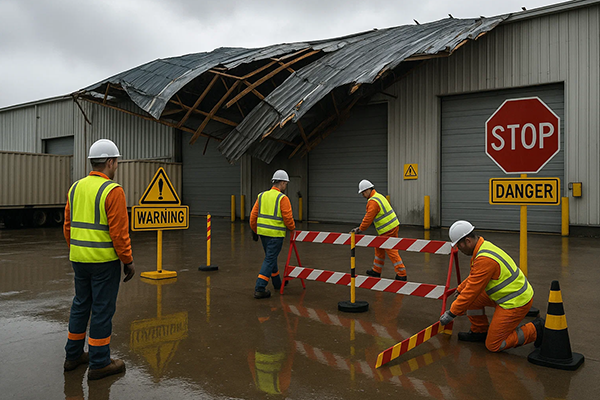
Severe Storm Damage to Fleets and Facilities Severe weather events hurricanes, floods, winter storms pose major threats to fleets and facilities, causing both financial loss and operational disruption. In 2023, the U.S. experienced a record 28 billion-dollar weather and climate disasters, costing an estimated $92.9 billion in total (Smith, 2024). Fleet and Transportation Risks Fleet […]
Managing Safety During Seasonal Production Spikes

Managing Safety During Seasonal Production Spikes Seasonal production spikes bring intense demand, overtime, and rapid onboarding of temporary staff. These conditions increase the chance of errors and injuries, which is why planning for safety must rise with output. Private industry recorded 2.8 million nonfatal injuries and illnesses in 2022, a reminder that peak periods magnify […]
Leveraging Drone Footage for Site-Wide Safety Briefings

Leveraging Drone Footage for Site-Wide Safety Briefings Drone video turns a complex job site into a clear, shared picture. Used inside daily briefings and orientations, high-angle visuals help crews see traffic conflicts, blind corners, fall exposures, and egress routes before work begins. That visibility matters: the United States recorded 5,283 work fatalities in 2023 and […]
Subcontracted Logistics Safety: Closing Multi‑Employer Risk Gaps

Overlooking Safety Risks in Subcontracted Logistics When prime contractors outsource warehousing, drayage, last-mile delivery, or rail transloading, safety gaps often travel with the contract. Under the OSHA’s Multi-Employer Citation Policy (Multi-Employer Citation Policy, 1999), host employers can be cited alongside contract employers when hazards affect subcontracted workers, making “it’s the vendor’s job” a costly myth. […]
