

Climate-Driven Risk Scenarios for U.S. Transportation, Railroad, and Construction Operations
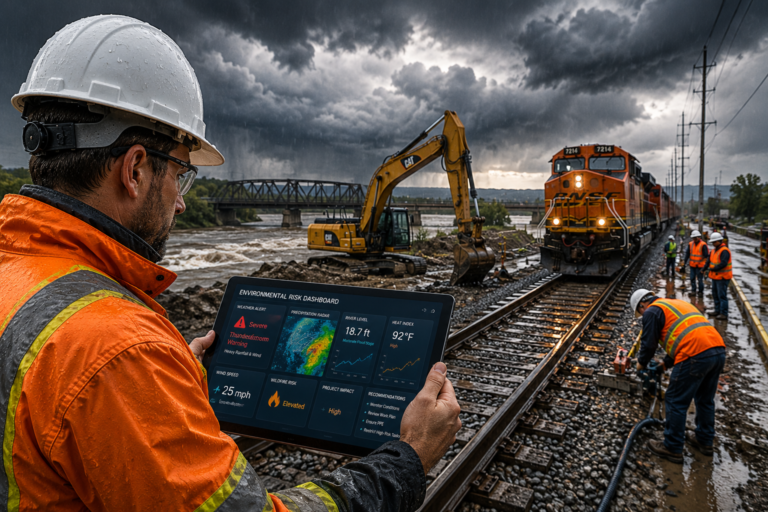
EHS consulting and OSHA compliance strategies are rapidly evolving as climate-driven operational risks become more significant across transportation, railroad, and construction sectors. Organizations that once treated severe weather as isolated events are now confronting a broader operational reality where climate-related disruptions directly affect safety management, infrastructure reliability, workforce exposure, and regulatory compliance.
Across the United States, transportation corridors, rail infrastructure, and construction projects are experiencing increasing exposure to extreme heat, flooding, severe storms, wildfire smoke, and changing environmental conditions. These events are no longer viewed solely as environmental concerns. They are operational and safety risks that directly impact project continuity, worker safety, and asset performance.
The Occupational Safety and Health Administration continues emphasizing employer responsibilities related to workplace hazards, including heat-related illness prevention and emergency preparedness OSHA’s heat exposure guidelines (n.d.) and OSHA’s emergency preparedness framework (n.d) . Climate-driven operational changes are increasing pressure on organizations to strengthen hazard identification, operational planning, and workforce protection measures.
In railroad operations, climate-related risks can affect track integrity, signal systems, bridge stability, and operational visibility. Extreme heat contributes to rail expansion and track buckling, while flooding and severe storms increase the likelihood of washouts, infrastructure damage, and operational interruptions. Railroad organizations are increasingly recognizing that climate resilience is becoming part of long-term safety and asset management planning.
Transportation operations face similar challenges. Increased storm frequency, changing weather patterns, and heat-related infrastructure stress are affecting logistics networks, vehicle reliability, and operational scheduling. Airports, trucking operations, and intermodal facilities are also experiencing greater operational disruption from climate-related events, increasing pressure on leadership teams to improve contingency planning and operational adaptability.
Construction environments are particularly vulnerable because of direct workforce exposure to changing environmental conditions. Heat stress, severe weather, poor air quality, and unstable ground conditions significantly affect worker performance, fatigue levels, and decision-making. Construction schedules and operational demands can unintentionally increase exposure if organizations fail to adapt planning processes to evolving environmental risks.
ISO 45001 emphasizes proactive hazard identification, operational control, and continual improvement within occupational health and safety management systems (International Organization for Standardization, 2018). Climate-driven risk scenarios reinforce the importance of integrating environmental conditions into operational risk assessments rather than treating them as isolated emergency situations.
One of the most significant leadership challenges is the transition from reactive emergency response to proactive resilience planning. Historically, many organizations focused primarily on responding to major weather events after they occurred. Current operational realities require organizations to evaluate how environmental conditions affect daily operations, workforce performance, infrastructure reliability, and long-term business continuity.
Data and operational visibility are becoming increasingly important in this process. Organizations are using weather analytics, infrastructure monitoring systems, predictive maintenance technologies, and operational modeling to better understand how environmental conditions influence risk exposure. However, technology alone is insufficient without operational integration and leadership engagement.
Communication and workforce preparedness also remain critical. Employees operating in transportation, rail, and construction environments must understand how environmental conditions affect operational hazards and decision-making expectations. Training programs that fail to address evolving environmental conditions may leave organizations vulnerable during rapidly changing operational scenarios.
Another growing concern involves regulatory scrutiny. As climate-related operational risks increase, organizations may face greater expectations regarding preparedness, hazard mitigation, emergency planning, and workforce protection. Failure to adapt operational controls to known environmental risks may create both safety and liability concerns.
Organizations that are successfully strengthening climate resilience are integrating environmental risk considerations into broader operational and safety management systems. They are reevaluating scheduling practices, emergency response plans, infrastructure protection strategies, and workforce protection measures to improve operational continuity under changing conditions.
EHS consulting partners frequently assist organizations by conducting climate-related operational risk assessments, strengthening emergency preparedness programs, and aligning resilience strategies with OSHA compliance obligations and ISO-based management systems. This integrated approach helps organizations move beyond reactive response models toward long-term operational resilience.
Climate-driven operational risks are no longer future concerns. They are active business risks affecting transportation networks, railroad infrastructure, and construction operations today. Organizations that proactively adapt their safety management strategies will be better positioned to protect workers, maintain operational continuity, and manage increasing regulatory and operational pressures.
The future of operational resilience will depend on how effectively organizations integrate environmental risk awareness into leadership decision-making, infrastructure planning, and workplace safety strategies.
References
International Organization for Standardization. (2018). Occupational health and safety management systems – Requirements with Guidance for use. (ISO Standard No. 45001:2018). https://www.iso.org/standard/63787.html
Occupational Safety and Health Administration. (n.d.). Emergency preparedness and response. U.S. Department of Labor. https://www.osha.gov/emergency-preparedness
Occupational Safety and Health Administration. (n.d.). Occupational heat exposure. U.S. Department of Labor. https://www.osha.gov/heat-exposure
Comments:
