
Safety Maturity as a Business Growth Indicator for 2026

Strategic Advantage Across Manufacturing, Construction, Transportation, and Railroad Safety maturity is increasingly recognized as a leading indicator of business growth, operational resilience, and enterprise risk management effectiveness. In 2026, organizations across manufacturing, construction, transportation, and railroad sectors face heightened regulatory scrutiny, workforce constraints, and investor expectations tied directly to safety management performance. From an EHS […]
Closing the Year With Control in Construction Safety

Closing the Year With Control: How Construction Companies That Treated Safety as a Business Strategy Are Positioned to Grow in the Year Ahead EHS consulting and OSHA compliance are often evaluated retrospectively at year end, yet the strongest construction organizations use this moment to assess something far more important: control. As projects close out and […]
Emergency Response Miscommunication and Operational Delays
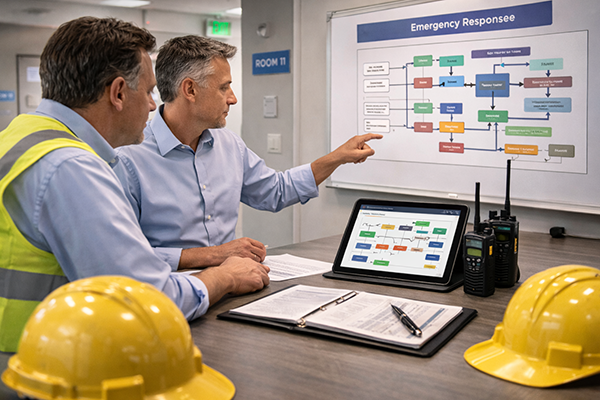
When Emergency Response Miscommunication Delays Operations: A Risk Construction and Healthcare Leaders Can’t Ignore EHS consulting and OSHA compliance efforts often focus on preventing incidents, yet many operational disruptions occur after an emergency has already begun. In construction and healthcare, delays caused by emergency response miscommunication routinely escalate injuries, prolong shutdowns, and expose leadership to […]
Avoiding Burnout in Stretched EHS Teams

Avoiding Burnout in Stretched EHS Teams: A Leadership Risk Hiding in Plain Sight EHS consulting and OSHA compliance efforts increasingly depend on small, highly specialized teams carrying expanding scopes of responsibility. In manufacturing, healthcare, nuclear energy, transportation, and logistics, EHS professionals are being asked to manage regulatory complexity, operational risk, and workforce expectations with fewer […]
Winning More Contracts Through Proven Safety Leadership | Key Safety LLC

Winning More Contracts Through Proven Safety Leadership: What Owners and Primes Actually Trust EHS consulting and OSHA compliance are no longer “back office” functions for high-performing contractors and operators; they are visible indicators of execution discipline, risk management maturity, and customer reliability. In construction, manufacturing, transportation, food, entertainment, and energy, workplace safety is increasingly treated […]
Delays Caused by Poor Route Risk Analysis in Transportation, Rail, and Logistics | Key Safety LLC

Delays Caused by Poor Route Risk Analysis: The Hidden Cost in Rail, Trucking, and Logistics EHS consulting and OSHA compliance often focus on incident prevention, but in transportation, railroad, and logistics operations, poor route risk analysis is also a direct driver of schedule failure, cost escalation, and customer dissatisfaction. When route hazards are not systematically […]
Aligning Safety Plans With Q4 Performance Reviews | Manufacturing & Transportation | Key Safety LLC

Aligning Safety Plans With Q4 Performance Reviews: Turning OSHA Compliance Into Operational Leverage EHS consulting and OSHA compliance often get treated as “separate” from performance management, even though workplace safety outcomes are created by the same leadership systems that drive quality, cost, delivery, and customer performance. In manufacturing and transportation operations, Q4 performance reviews are […]
Adopting Modular Safety Systems for Scalable Jobsite Expansion | Key Safety LLC

Adopting Modular Safety Systems for Scalable Jobsite Expansion Business growth is often viewed as a sign of success. New projects, additional crews, expanded geographic footprints, and increased revenue all signal positive momentum. Yet for many organizations operating in construction, manufacturing, and transportation, expansion introduces a parallel challenge that is frequently underestimated: maintaining safety consistency while […]
Why Drivers Leave Unsafe or Disorganized Workplaces | Understanding Turnover in Transportation | Key Safety LLC

Driver Turnover from Unsafe or Disorganized Environments Employee retention in operational environments is often misunderstood as a purely financial issue. Many organizations assume drivers and frontline transportation workers leave because of higher wages offered elsewhere. While pay remains a relevant factor, research and industry patterns show that turnover is most frequently driven by unsafe, chaotic, […]
Reacting to Severe Weather Alerts with Minimal Disruption | Key Safety LLC
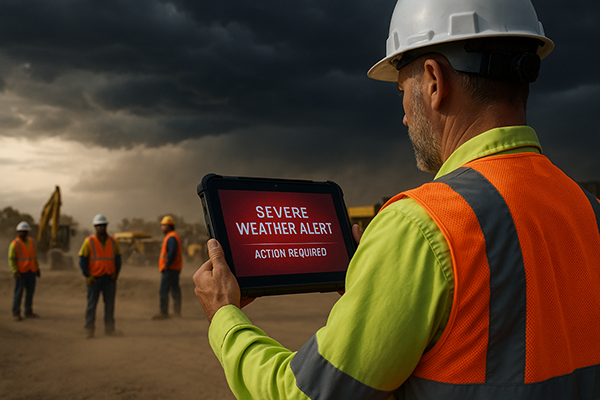
Reacting to Severe Weather Alerts with Minimal Disruption Severe weather alerts are no longer rare seasonal events; for many construction, transportation, industrial and logistics operations, they are a recurring operational constraint. Tornadoes, severe wind, flooding, lightning and hurricanes can rapidly transform a normal shift into an emergency scenario if organizations are not prepared to act. […]
